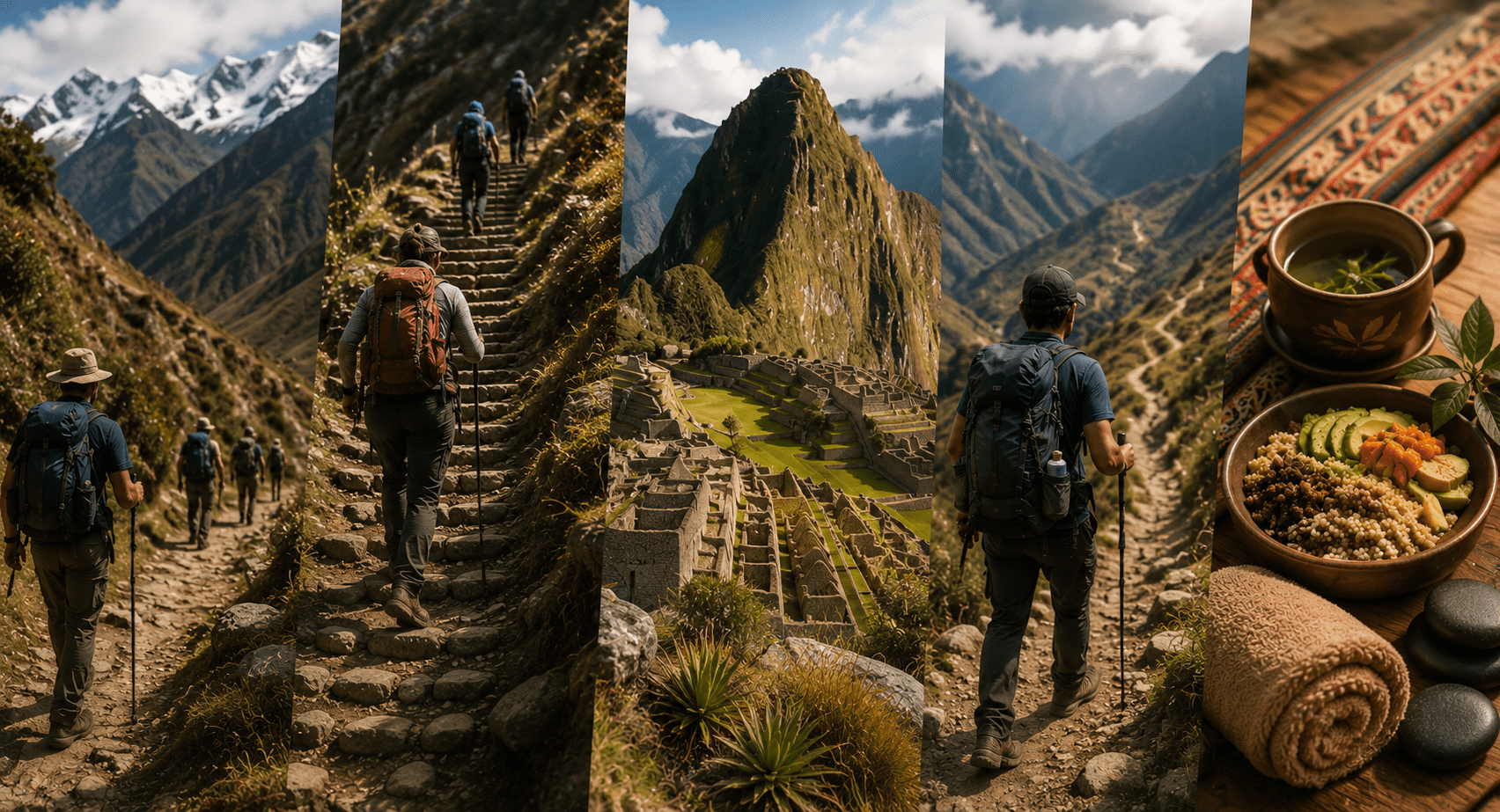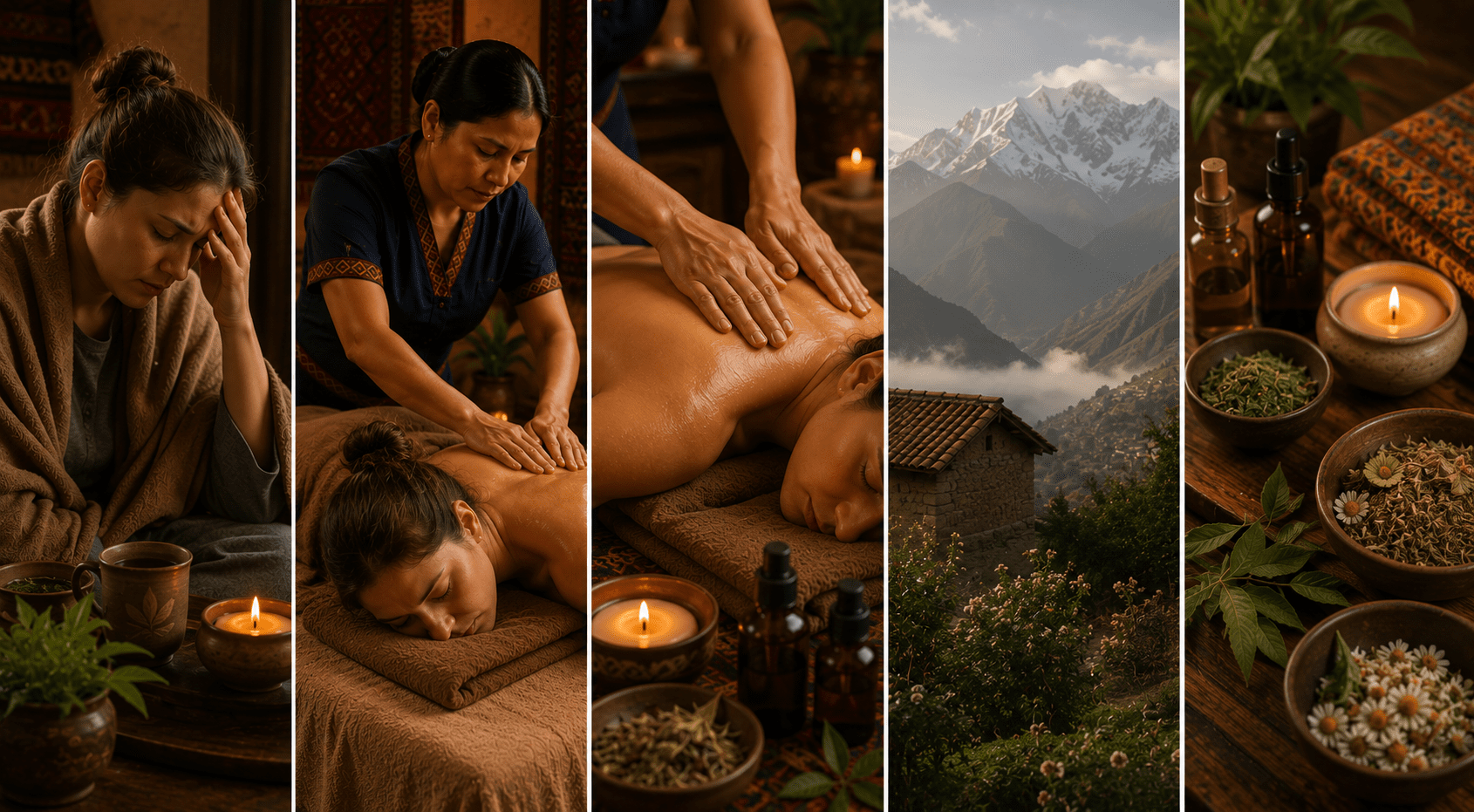
Sore legs after the Inca Trail hit almost every trekker. Four days of stone steps, steep climbs, and long descents work muscles you rarely use at home. So if you struggle to walk down the stairs at your hotel in Cusco, you are not alone. The good news is that a few smart habits can ease the pain faster. As massage therapists in Cusco, we see this every trekking season, so here is what helps, what to avoid, and when to ask for medical advice.
Why You Get Sore Legs After the Inca Trail?
The classic Inca Trail covers about 39 kilometers (24 miles) in four days. However, the route climbs and drops over three high Andean passes, including Dead Woman’s Pass at about 4,215 meters. In addition, you walk thousands of uneven stone steps. Your legs work hard on every one of them, and the descents demand the most. Curious how tough the route really is? Read our Inca Trail difficulty guide.
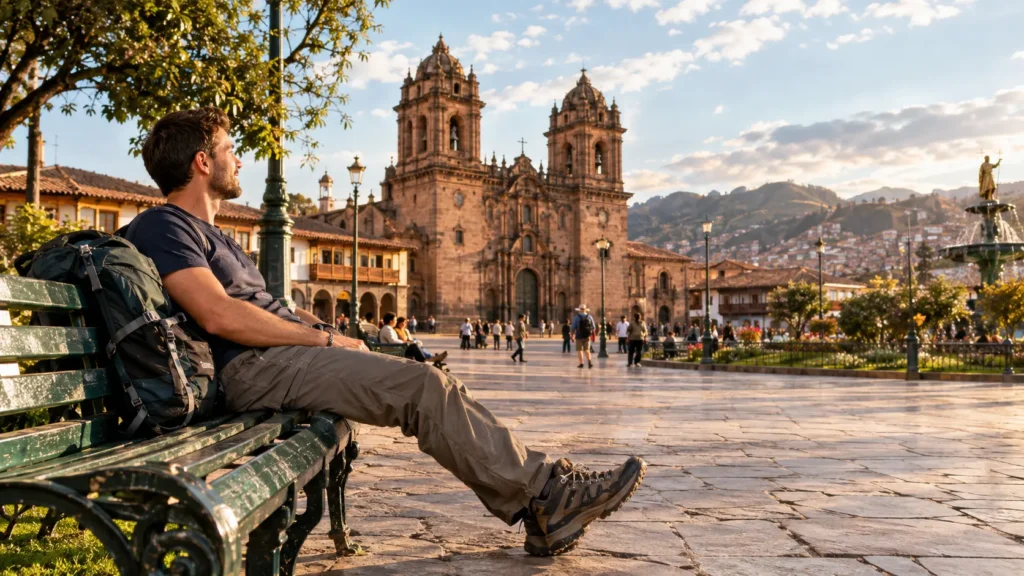
Steep Descents Strain Your Muscles
Going downhill makes your muscles lengthen while they work. Research on downhill muscle damage links this kind of effort to tiny tears in the muscle fibers. As a result, sore legs after the Inca Trail often peak 24 to 48 hours after you finish, not right away. This delayed soreness is normal, and it usually fades on its own.
Altitude Can Slow Your Recovery
Cusco sits at roughly 3,400 meters. The CDC explains that high-altitude environments bring cold, low humidity, and less oxygen. As a result, dehydration comes easily, and your body may recover more slowly. Therefore, your legs can feel heavier here than after a hike at sea level. Also learn the altitude sickness symptoms, so you can tell them apart from normal muscle soreness.
What Helps Sore Legs After the Inca Trail?
You cannot skip the soreness completely, but these habits can ease sore legs after the Inca Trail during the first 48 hours.
Keep Moving Gently
Rest feels tempting, yet complete stillness makes muscles stiffer. Instead, take short, easy walks around Cusco. Ten to twenty minutes on flat streets is enough. This light movement improves blood flow and reduces stiffness.
Drink Water and Eat Well
Your muscles need fuel to repair themselves. First, drink water throughout the day. Then eat a real meal with protein and carbohydrates, such as quinoa soup, chicken, or eggs with rice. In addition, add fruit and vegetables for extra vitamins.
Stretch Softly and Elevate Your Legs
A warm shower before stretching helps your muscles relax. Once your legs feel warm, hold each stretch for 20 to 30 seconds and breathe slowly:
- Calves: lean against a wall with one leg behind you.
- Thighs: stand and hold your ankle behind you.
- Hamstrings: sit and reach gently toward your toes.
- Hips: lie on your back and hug one knee to your chest.
Afterward, rest your legs on a pillow for ten minutes. This position often reduces the heavy feeling.
Get a Massage for Sore Legs After the Inca Trail
A massage can help tight muscles feel looser. However, timing matters. Wait until the first day of intense pain has passed. Most people feel comfortable about 24 to 48 hours after the trek, and light to medium pressure works best at first. A muscle recovery massage focuses on the legs, hips, and lower back, which carry the biggest load on the trail. Later in your stay, a deep tissue massage can work on stubborn knots. If your feet ache too, reflexology gives them extra attention.
What to Avoid With Sore Legs After the Inca Trail?
Some habits slow down recovery. Fortunately, they are easy to skip.
Drinking Too Much Alcohol
Celebrating after four hard days is fair. However, alcohol dehydrates you, and it hits harder at altitude. Enjoy one drink if you like, then switch to water.
Forcing Deep Stretches or Hard Pressure
Sore muscles already have tiny tears, so aggressive stretching or bouncing can make them worse. In the same way, very deep pressure on the first day can hurt more than it helps. Be gentle, and stop if something feels sharp.
Ignoring Warning Signs
Normal soreness feels dull and affects both legs. However, see a doctor if you notice sharp pain, swelling in one leg, redness, warmth, or pain that keeps getting worse. Seek help right away if you have chest pain or trouble breathing. These signs are not typical muscle soreness. This article shares general information and does not replace medical advice.
How Long Do Sore Legs After the Inca Trail Last?
Most people feel the worst pain 24 to 48 hours after finishing. After that, the soreness usually improves within three to seven days. Researchers have tracked the time course of soreness and stiffness after eccentric exercise, and the pattern varies from person to person. Your fitness level, hiking experience, and the number of steep descents all change your timeline. If the pain stays strong after a week, talk to a doctor.
Your Simple 3-Day Recovery Plan for Sore Legs After the Inca Trail
Day 1: Right After the Trek
- Take a warm shower.
- Eat a full meal and drink plenty of water.
- Walk gently for ten minutes.
- Sleep early.
Day 2: Rest and Move in Cusco
- Take a slow walk and stretch softly.
- Rest your legs on a pillow.
- Book a massage if the sharp pain has eased.
Day 3: Ease Back Into Sightseeing
- Add a longer walk around the city.
- Get your massage if you have not yet.
- Skip steep outings like Rainbow Mountain until your legs feel normal again.
Recover From Sore Legs After the Inca Trail in Cusco
If your legs still ache, a massage can make a real difference. Our therapists understand how tired legs feel after the Inca Trail, the Salkantay Trek, and other long hikes. Not sure which treatment fits? See our guide to the best massages in Cusco. Then visit us at Calle Plateros 316, just off the Plaza de Armas, or message us on WhatsApp to book your session.